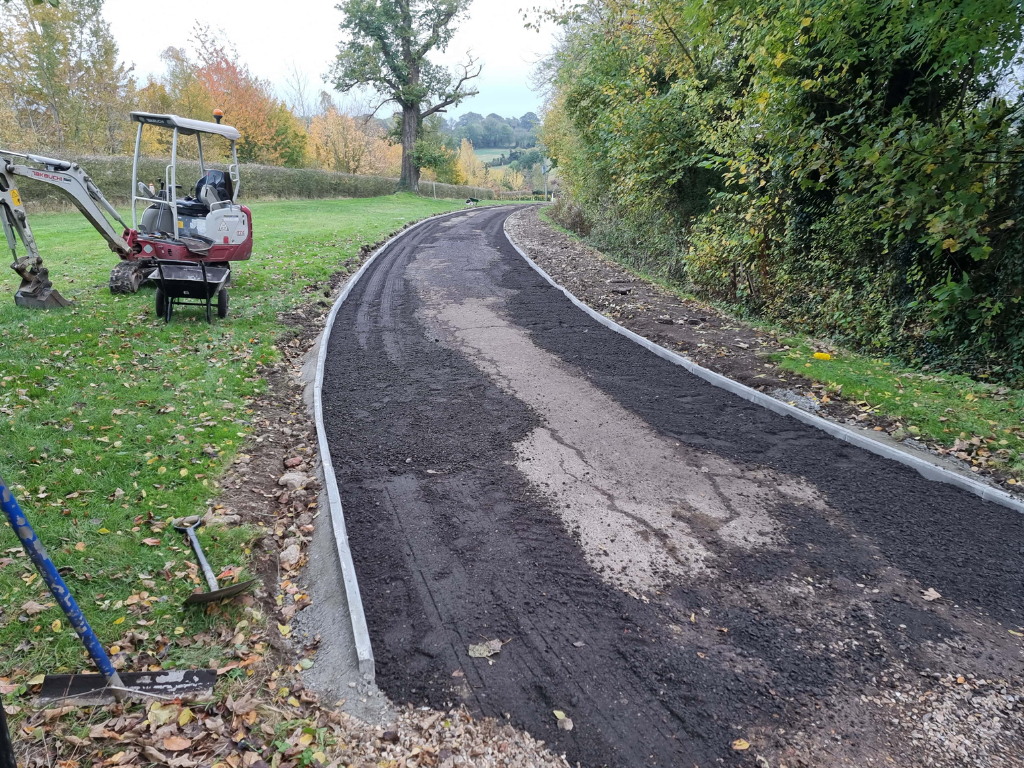
Is It Better to Repair an Ageing Driveway or Replace the Surface Completely?
An ageing driveway will rarely deteriorate all at once. More often, the changes happen gradually: a few cracks appear, isolated areas begin to sink, the surface becomes uneven, or previous repairs start becoming increasingly noticeable. At some point, homeowners need to decide whether further repairs remain worthwhile or whether replacing the surface completely would provide a better long-term solution.
For homeowners in Lakenheath, Suffolk, there is no single answer that applies to every driveway. The right approach depends on the extent of deterioration, the condition of the underlying construction and whether the problems are confined to individual areas or occurring throughout the surface.
Start by Looking at the Overall Condition
The most important distinction is between localised damage and widespread deterioration.
A driveway that remains structurally sound across most of its area may only need targeted repairs. If defects are appearing throughout the surface, however, repairing each problem separately may no longer address the overall condition.
Useful questions include:
- Are cracks confined to one small section?
- Are several areas beginning to sink?
- Does water collect in multiple places?
- Is the surface breaking up across a wider area?
- Have previous repairs started deteriorating?
- Does the driveway feel uneven when walking or driving across it?
- Are new problems appearing regularly?
Looking at the complete driveway provides a much clearer basis for deciding what work is appropriate.
When Can Driveway Repairs Be Effective?
Repairs can be a sensible option when deterioration is limited and the surrounding surface remains in good condition.
For example, an isolated damaged section may sometimes be repaired without disturbing the remainder of a serviceable driveway.
Targeted repairs are most suitable when the underlying problem can be identified and corrected rather than simply covered over.
This distinction is important. A successful repair should deal with the reason the surface has deteriorated, not only improve its immediate appearance.
Small Cracks Should Still Be Investigated
A small crack does not automatically mean a driveway needs replacing.
However, cracking can provide useful information about what is happening within the surface. An isolated crack may represent localised deterioration, while extensive or recurring cracking can indicate movement or weakness affecting a larger area.
Simply filling visible cracks without understanding why they formed may result in the same problem returning.
Professional assessment can help determine whether the cracking is superficial or connected to conditions beneath the surface.
Sunken Areas Can Point to Problems Below
When part of a driveway begins sinking, the visible depression is often only the result of something happening underneath.
Possible contributing factors can include inadequate support, movement within the underlying layers or deterioration affecting the construction beneath the surface.
Sunken sections can also alter how rainfall behaves across the driveway. Water may begin collecting in low areas rather than moving away as intended.
If the problem is genuinely localised, repairing the affected section may be possible. When settlement is occurring across several areas, more extensive work may provide a more appropriate solution.
Drainage Problems Should Not Be Treated as Cosmetic Defects
Standing water can be an important warning sign on an ageing driveway.
A puddle may appear to be a minor inconvenience, but repeated water accumulation often indicates that the levels of the surface have changed or that a depression has developed.
Where several low areas are present, this may suggest broader movement or deterioration.
Replacing an ageing surface provides an opportunity to reassess the driveway’s levels and overall construction rather than repeatedly dealing with individual low spots.
Consider How Frequently Repairs Are Needed
One of the clearest signs that an ageing driveway may need a more comprehensive solution is when repairs become increasingly frequent.
A driveway that develops one isolated defect over many years is very different from one where new cracks, depressions or damaged sections appear regularly.
Repeated repairs can indicate that the wider surface or supporting construction is reaching a stage where localised work is no longer resolving the underlying deterioration.
At that point, considering the driveway as a complete system becomes increasingly important.
Previous Repairs Can Reveal the History of the Surface
Older driveways sometimes contain several patches from work carried out at different times.
Individual repairs may have been entirely appropriate when each defect first appeared. However, when patches become widespread, they can reveal how deterioration has progressed across the driveway.
A heavily patched surface may also begin to look inconsistent, particularly where different areas have weathered differently.
If problems continue developing around previous repairs, complete resurfacing or replacement may provide a more unified approach.
Surface Condition Is Only Part of the Decision
One of the most important aspects of driveway work is what lies beneath the visible surface.
A new top layer will only perform properly when it has suitable support.
The condition of the underlying construction influences:
- Surface stability
- Resistance to vehicle movement
- Finished levels
- Drainage performance
- Long-term durability
This is why professional assessment is valuable before deciding whether to repair or replace an ageing driveway.
If the underlying construction remains sound, retaining it may be possible depending on the type and condition of the driveway. If significant weaknesses exist below the surface, they need to be addressed as part of the work.
When Does Complete Replacement Become Worth Considering?
Replacing the surface may become the more appropriate option when deterioration is no longer confined to a few isolated areas.
Signs that a broader solution may be needed include:
- Widespread cracking
- Multiple sunken areas
- Significant surface breakup
- Extensive unevenness
- Repeated drainage problems
- Numerous previous repairs
- Recurring defects
- General deterioration across most of the driveway
No single sign automatically determines the answer. It is the overall pattern and condition that matter.
Replacement Provides an Opportunity to Address Underlying Problems
One of the main advantages of more extensive driveway work is the ability to investigate and correct problems beneath the existing surface.
If an ageing driveway has become uneven because the supporting layers have deteriorated, simply covering the visible defects may leave the original weakness in place.
Proper replacement can allow attention to be given to:
- Existing surface deterioration.
- Ground and base conditions.
- Areas of settlement or weakness.
- Required levels.
- Drainage considerations.
- Edge support.
- The construction of the new surface.
This creates a stronger foundation for the finished driveway.
A New Surface Can Improve More Than Appearance
Homeowners often notice the visual difference first, but replacing an ageing driveway can improve its practical performance as well.
A properly constructed surface can provide:
- More consistent levels
- A smoother approach to parking areas
- Better-defined edges
- Improved overall presentation
- More predictable water movement
- A cleaner transition between the driveway and surrounding areas
These improvements can make the driveway feel like a more integrated part of the property rather than simply an area used for vehicle access.
Do Not Replace a Serviceable Driveway Unnecessarily
Complete replacement is not automatically the best answer simply because a driveway is old.
Age alone does not determine condition.
A well-constructed older driveway with only minor localised defects may remain suitable for targeted repair. Removing serviceable construction without first assessing its condition would overlook the possibility of a simpler solution.
The decision should therefore be based on performance and structural condition rather than age alone.
Equally, Avoid Repairing a Surface Beyond Its Useful Condition
The opposite approach can also create problems.
Continuing to repair isolated areas of a driveway that is deteriorating throughout may only postpone a more comprehensive solution.
If defects are being caused by widespread weakness, each new patch deals with a symptom rather than addressing the overall problem.
Professional inspection helps establish where the driveway sits between these two situations.
Think About How the Driveway Is Used
The demands placed on a driveway should also form part of the assessment.
A surface regularly used by vehicles needs appropriate support and construction. Where an older driveway has changed in use over time, its existing structure may not perform as effectively as it once did.
Understanding current usage helps determine what work is appropriate and how any replacement surface should be constructed.
Why Professional Driveway Assessment Matters
From ground level, homeowners can easily identify cracks, puddles and worn areas. What is more difficult to establish is why those defects have developed.
Professional assessment looks beyond the visible symptoms.
An experienced driveway contractor can consider:
- The extent of surface deterioration
- The pattern of cracking
- Areas of movement or settlement
- Existing levels
- Drainage performance
- Edge condition
- Previous repairs
- Underlying construction
This provides the information needed to recommend repair where repair is worthwhile and more extensive work where the driveway has deteriorated beyond that point.
Driveway Repairs and Replacement in Lakenheath
At Lakenheath Driveway Services, we provide professional driveway services throughout Lakenheath, Suffolk. When an existing driveway begins showing its age, our focus is on assessing its actual condition before determining the appropriate approach.
Where deterioration remains localised and the surrounding construction is sound, targeted work may be sufficient. Where problems have become widespread or underlying weaknesses are affecting several areas, a more comprehensive solution may produce a better long-term result.
Careful preparation is fundamental whichever approach is required. The finished surface can only perform as intended when the causes of existing deterioration have been properly understood and addressed.
Conclusion
Whether an ageing driveway should be repaired or replaced completely depends primarily on the extent and cause of its deterioration. Localised cracks, isolated damage or a small affected area may be suitable for repair when the wider driveway remains sound.
When cracking, sinking, unevenness, drainage problems and previous repairs have become widespread, continuing to treat each defect separately may no longer provide the most effective solution. More extensive replacement can allow the underlying construction, levels and surface to be addressed together.
For homeowners in Lakenheath, Suffolk, Lakenheath Driveway Services can assess an ageing driveway and recommend an approach based on its actual condition. If your driveway is beginning to deteriorate and you are unsure whether repair or replacement is the better option, contact our team to arrange an assessment and discuss the most appropriate way forward.
Call us on: 01842 778 593
Click here to find out more about Lakenheath Driveway Services
Click here to complete our contact form and see how we can help with your driveway needs.